
Carney Denounces Trump's Trade Tariffs as Strategic Miscalculation Amid Negotiations
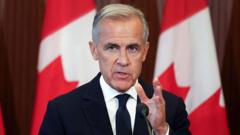
Carney Denounces Trump's Tariffs as Strategic Miscalculation
Canada's Prime Minister expressed serious concerns regarding Trump tariffs, characterizing them as a strategic miscalculation that threatens bilateral trade relations. The declaration came amid deteriorating negotiations between the two nations, marking a significant escalation in their ongoing economic tensions.
In a statement to the press, the Canadian leader announced a reluctant yet necessary response involving retaliatory measures against American goods. The decision reflects mounting frustration with what Ottawa views as unilateral protectionist policies undermining the foundation of North American trade agreements.
The Collapse of Trade Negotiations
Diplomatic efforts to resolve the trade dispute reached an impasse, forcing Canadian officials to abandon peaceful resolution attempts. According to government sources, preliminary discussions had shown promise until the Trump administration introduced unexpected tariff proposals that fundamentally altered the negotiating landscape.
The breakdown occurred after weeks of back-and-forth communications between trade representatives from both nations. Canadian negotiators expressed dismay at what they perceived as sudden policy shifts that contradicted earlier agreements and understandings.
Canada's Retaliatory Response Framework
Faced with what government officials characterized as economic aggression, Canada prepared comprehensive retaliatory tariffs targeting specific American sectors. The response was carefully calibrated to impose equivalent economic pressure while maintaining options for future diplomatic engagement.
Canadian policymakers emphasized that these measures were not their preferred course of action but rather a necessary defensive response. The timing and scope of the retaliation reflected calculations about maximum economic impact combined with proportional equivalence.
Targeted Sectors and Implementation
The retaliatory framework identified multiple American industries for tariff increases, including agricultural products, manufactured goods, and technology components. Implementation timelines were established to allow for a brief window during which negotiations could potentially prevent full activation of these punitive measures.
Characterizing the Escalation as Trade War
Canadian officials did not shy away from describing the situation as a trade war, pointing to the escalatory nature of unilateral tariff announcements without prior warning or negotiation. This characterization represented a significant rhetorical shift, suggesting patience with diplomatic approaches had expired.
The trade war assessment underscored concerns about broader implications for supply chains, employment, and consumer prices across both economies. Economic analysts warned that prolonged tariff disputes could damage integrated manufacturing networks that depend on cross-border movement of goods and components.
International Trade Law and Dispute Resolution
Legal experts noted that the tariff conflict raised questions about compliance with international trade obligations and dispute settlement procedures. Both nations held membership in organizations designed to arbitrate such disagreements, though political will to pursue formal mechanisms remained uncertain.
The situation highlighted underlying tensions about protectionist policies and their intersection with established trade frameworks. Some analysts suggested that resolution would require both sides to engage with international bodies rather than rely solely on bilateral negotiations.
Broader Economic Implications
Beyond immediate bilateral concerns, the Trump tariffs and resulting Canadian response threatened broader North American economic stability. Industries dependent on integrated supply chains faced uncertainty about future tariff environments and potential profit margin compression.
Business communities on both sides of the border expressed concern about prolonged uncertainty. Companies with significant cross-border operations faced difficult decisions about investment planning, production location, and inventory management amid unpredictable policy environments.
Looking Forward: Path to Resolution
Despite the hardened rhetoric and retaliatory measures, both governments theoretically retained capacity to resume negotiations. However, the escalation through tariff announcements and retaliation had raised political stakes for both sides, complicating any reversal or compromise.
Canadian officials indicated they would pursue resolution through available diplomatic channels while maintaining readiness to implement full retaliatory measures if necessary. The stance reflected determination to protect domestic interests while preserving long-term relationship management with the United States.


