
Critical Technology Infrastructure Faces Heat Vulnerability Risks
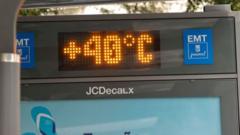
Heat Vulnerability in Critical Technology Infrastructure
Heat vulnerability technology represents one of the most pressing challenges facing modern societies as global temperatures continue to rise. Essential infrastructure systems, particularly energy grids and train services, face unprecedented risks during periods of extreme heat that can disrupt services and threaten public safety.
Energy Grids Under Thermal Stress
Electrical power systems demonstrate significant heat vulnerability technology challenges during summer months and heatwaves. The infrastructure that delivers electricity to millions of households and businesses operates within specific temperature parameters. When ambient temperatures exceed design thresholds, transformers and transmission lines experience reduced efficiency and increased failure rates.
Power generation facilities struggle to maintain output during extreme heat conditions. Thermal power plants require cooling water, and when surrounding temperatures spike, the efficiency of cooling systems diminishes considerably. Similarly, solar panels, while generating renewable energy, experience reduced electrical output when overheated, creating a paradoxical situation where demand peaks precisely when supply becomes constrained.
Transmission Line Degradation
The physical infrastructure of energy grids faces severe heat vulnerability technology issues. Overhead transmission lines expand in extreme heat, causing them to sag and potentially come into contact with trees or structures, triggering short circuits. Underground cables equally suffer from thermal stress, with insulation materials degrading faster at elevated temperatures, shortening their operational lifespan dramatically.
Railway Networks and Heat Complications
Train services represent another critical sector affected by heat vulnerability technology. Rail infrastructure depends on precise structural integrity to ensure safe passenger and freight transportation. Steel tracks expand substantially during temperature increases, potentially causing misalignment and operational hazards.
Modern rail signaling systems and electronic control mechanisms contain temperature-sensitive components that malfunction or provide inaccurate readings when exposed to extreme heat. Locomotives and train engines require effective cooling systems to prevent mechanical failure, yet high ambient temperatures reduce the efficiency of these cooling mechanisms.
Passenger Safety and Service Disruptions
Train carriages, particularly those lacking modern climate control, become dangerously hot during heat events, posing health risks to passengers. Rolling stock components such as pantographs, which collect power from overhead lines, experience electrical arcing and poor contact in high temperatures, causing service interruptions.
Broader Infrastructure Vulnerabilities
Beyond energy and rail systems, heat vulnerability technology affects telecommunications networks, water treatment facilities, and emergency response systems. Server farms and data centers require constant cooling to prevent equipment malfunction and data loss. Internet infrastructure depends on fiber optic cables that perform suboptimally when surrounding temperatures exceed specifications.
Water management systems face complications when treatment plants experience cooling failures, while emergency services struggle to maintain communication systems during peak demand periods that coincide with extreme heat events.
Climate Change and Future Projections
The increasing frequency and intensity of heatwaves due to climate change exacerbate heat vulnerability technology concerns. Infrastructure designed decades ago never anticipated contemporary temperature extremes, leaving systems operating near or beyond their design limits.
Adaptation strategies require substantial investments in upgrading aging infrastructure, implementing better cooling systems, and redesigning equipment to withstand higher temperatures. Some nations are implementing heat-resistant rail compounds and advanced monitoring systems to detect thermal stress before failures occur.
Conclusion
Addressing heat vulnerability technology requires coordinated efforts between government agencies, utility companies, and infrastructure operators. As extreme weather events become more common, upgrading critical systems to withstand thermal stress becomes not merely an operational concern but a fundamental necessity for maintaining social and economic stability. Investment in resilient infrastructure today will determine whether vital services can continue functioning reliably in tomorrow's hotter world.


