Farage Resigns as MP but Seeks Reelection Amid Party Boycott
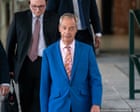
Farage's Strategic Resignation Announcement
Nigel Farage, leader of Reform UK, has announced his intention to resign from his parliamentary seat while simultaneously signaling his determination to contest the upcoming byelection in Clacton. This unexpected move has sparked significant political debate, with the Reform UK politician stating that constituents "should be the judges of my actions." The Farage resignation strategy has been characterized by critics as a calculated political maneuver designed to reset narrative dynamics within his constituency and party.
The decision to step down and immediately seek reelection represents an unconventional approach to political challenges facing the Reform UK leadership. By framing the decision as one that empowers voters to make their own judgment, Farage has positioned his resignation not as a retreat but as an opportunity for democratic validation.
Major Parties Decline Participation
In a remarkable show of unity, the Labour Party, Conservative Party, and Liberal Democrats have collectively announced their refusal to field candidates in the byelection triggered by Farage's resignation. This coordinated non-participation represents an extraordinary political consensus, effectively ceding the Clacton seat to enable the Reform UK leader to pursue his reelection strategy without traditional electoral competition.
The decision by established parties to abstain from the byelection process has been interpreted as tacit acknowledgment of Reform UK's dominance in the constituency and recognition that intervention would be counterproductive. Rather than mount campaigns they might not win, Labour, Tories, and Lib Dems have opted for strategic withdrawal.
Standards Investigation and Gifts Controversy
Paralleling Farage's resignation announcement, questions have emerged regarding potential parliamentary commissioner for standards investigations into gifts received from George Cottrell. When asked whether such inquiries should proceed, Conservative leader Kemi Badenoch indicated that determinations regarding parliamentary standards matters appropriately rest with the commissioner's office.
The distinction between political judgment and regulatory process has become increasingly important as these investigations develop. The parliamentary standards framework exists to maintain integrity within Westminster institutions, independent of partisan political pressures or electoral cycles.
Press Freedom and Government Power Concerns
During recent statements, Farage has made observations regarding press regulation that have triggered defensive responses from political opponents. In particular, concerns have been raised about whether a Reform government might utilize executive authority to constrain media operations or oversight functions.
Badenoch articulated strong opposition to any such approach, emphasizing that despite receiving critical coverage and antagonistic press treatment throughout her political career, she has never advocated restricting press freedom. "I've never once recommended curbing our free press," she stated, highlighting what she characterized as "one of the amazing things about this country." She expressed particular concern that a Reform government might weaponize governmental power against journalistic institutions, a prospect she deemed fundamentally incompatible with democratic principles.
Implications for British Politics
The convergence of Farage's resignation announcement, major parties' boycott of the byelection, and emerging standards investigations creates an unusual political moment. The Reform UK leader's strategy appears designed to strengthen his position within Clacton while avoiding direct competition from traditional rivals. Whether this approach will ultimately benefit or undermine his political standing remains subject to interpretation.
Political observers continue monitoring developments as parliamentary procedures advance and byelection timelines become clearer. The intersection of electoral strategy, standards compliance, and questions about government power and press freedom will likely dominate political discourse during coming weeks.