
Heatwave Vegetables Reshape UK Produce Markets
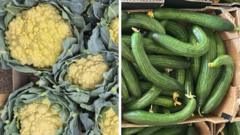
Heatwave Vegetables Transform British Market Landscape
The impact of consecutive heatwave episodes continues to reshape the vegetable supply across the United Kingdom, with British retailers and consumers now encountering distinctly different produce characteristics. Heatwave vegetables have become increasingly common on supermarket shelves, presenting shoppers with unconventional appearances that reflect the challenging growing conditions experienced throughout the nation.
Agricultural experts warn that recurring temperature extremes are fundamentally altering how vegetables develop during cultivation cycles. The British farming sector faces unprecedented pressure as climatic patterns shift, forcing both growers and distributors to adapt their supply chain strategies. Understanding these changes helps consumers appreciate the relationship between environmental conditions and food production.
The Science Behind Unusual Vegetable Appearances
Extreme heat exposure triggers physiological responses in crop development, resulting in heatwave vegetables with distinctive characteristics never previously observed at scale in UK markets. Cauliflowers exposed to prolonged sunshine develop deep tan coloration, transforming their typical pale ivory appearance into golden-brown tones. This darkening occurs as plants intensify protective pigment production to shield themselves from UV radiation and thermal stress.
Potato varieties similarly demonstrate unusual morphological features when cultivated under heat stress conditions. Rather than developing smooth, uniform surfaces, tubers grown in extreme temperatures often display pronounced knobby textures and irregular shapes. These knobbly spuds represent the plant's adaptive response to moisture fluctuations and soil temperature variations characteristic of heatwave periods.
Heat Stress Mechanisms in Crop Production
When ambient temperatures exceed optimal growing ranges, vegetables redirect energy from cosmetic development toward survival mechanisms. Root vegetables experience inconsistent water availability, causing uneven expansion patterns. Cruciferous vegetables like cauliflower allocate resources toward heat tolerance rather than symmetrical head formation, producing the distinctive wonky appearance increasingly visible in British supermarkets.
Market Implications and Retail Response
British retailers are actively educating consumers about heatwave vegetables, emphasizing that aesthetic irregularities do not diminish nutritional value or food safety. Progressive supermarket chains now market these unusual specimens as climate-resilient products, celebrating their authenticity and environmental significance. This repositioning helps reduce waste while acknowledging the reality of modern agricultural challenges.
Supply chain managers report increased consumer acceptance of wonky produce, particularly among environmentally conscious shoppers who recognize the connection between climate volatility and food appearance. The shift represents a cultural evolution in how British households perceive vegetable standards and quality metrics traditionally based on visual uniformity rather than nutritional content.
Nutritional Value Remains Unchanged
Despite their unusual appearances, heatwave vegetables maintain complete nutritional profiles equivalent to conventionally shaped produce. Sun-tanned cauliflowers deliver identical micronutrient concentrations and beneficial compounds as their pale counterparts. The deepened coloration actually indicates enhanced antioxidant production in response to environmental stress, potentially offering marginal nutritional advantages.
Knobbly potatoes perform identically in culinary applications, requiring only additional trimming before preparation. Flavor profiles, starch content, and cooking characteristics remain consistent regardless of external morphology. Nutritionists confirm that shoppers should select these vegetables without hesitation, as heatwave vegetables represent perfectly suitable food sources for balanced dietary planning.
Climate Adaptation in UK Agriculture
British farmers increasingly recognize the necessity of adapting cultivation practices to accommodate recurring heatwave episodes. Crop selection, irrigation methodology, and soil management strategies are undergoing fundamental reassessment throughout agricultural regions. Forward-thinking producers are investing in heat-tolerant varieties specifically developed for temperature-stressed environments.
Research institutions across Britain are accelerating agricultural science programs focused on climate resilience. These initiatives seek to stabilize vegetable production amid temperature volatility while maintaining supply reliability for consumers. The integration of innovative growing techniques alongside selective breeding programs promises enhanced adaptation capacity for future growing seasons.
Consumer Guidance and Purchasing Strategies
British households should embrace heatwave vegetables as viable alternatives to cosmetically perfect produce. Wonky vegetables often represent superior value propositions, frequently offered at reduced prices despite equivalent nutritional merit. Shopping for these products directly supports farmers managing climate-imposed challenges while reducing household food expenditure.
Consumers benefit from understanding that irregular appearances signal authenticity rather than inferiority. Sun-tanned cauliflowers and knobbly spuds represent genuine responses to environmental pressures, not manufacturing defects. Incorporating these vegetables into meal planning demonstrates environmental consciousness while supporting sustainable agricultural practices throughout the United Kingdom.
Future Outlook for British Vegetable Production
As climate patterns continue evolving, heatwave vegetables may become the standard rather than exception in UK markets. Agricultural sectors must implement comprehensive adaptation strategies to maintain production viability. Continued investment in climate-resilient farming technology will determine whether British agriculture can sustain vegetable supply amid temperature extremes.
The transformation currently underway represents both challenge and opportunity for British food systems. While heatwave vegetables reflect environmental pressures on farming communities, they simultaneously demonstrate agricultural resilience and consumer flexibility. Future success depends on collaborative approaches integrating scientific innovation, policy support, and public understanding of climate-agriculture relationships.


