
Trump Announces Reduction in US-South Korea Military Drills Following Iran Conflict
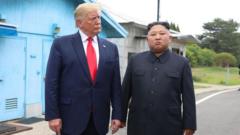
Trump Announces Major Changes to US-South Korea Military Strategy
The United States will significantly reduce the scope and scale of its military drills with South Korea, according to an announcement made by President Trump. This decision comes as a strategic response to the evolving geopolitical landscape, particularly in light of recent regional developments involving Iran. The military drills South Korea has traditionally participated in represent a cornerstone of the bilateral defense relationship between Washington and Seoul, making this announcement a notable shift in approach.
Rationale Behind the Defense Decision
Trump justified the reduction in military exercises by emphasizing his positive diplomatic relationship with North Korean leadership. The President cited his "very good relationship" with North Korea's leader as a key factor influencing the decision to downsize these operations. This approach reflects a broader strategy of prioritizing diplomatic engagement and maintaining channels of communication with Pyongyang over maintaining the previous intensity of military readiness exercises in the region.
The timing of this announcement is particularly significant given that South Korea chose to remain neutral and refrain from direct military involvement in the recent Iran conflict. This restraint by Seoul appears to have influenced Washington's reassessment of the necessity and scale of regular military drills between the two allied nations. The decision underscores the interconnectedness of regional security concerns and the impact they have on bilateral military cooperation arrangements.
Implications for Regional Security
The reduction in US military drills with South Korea carries substantial implications for the security architecture of Northeast Asia. These exercises have historically served as a demonstration of military readiness, deterrence capability, and commitment to the defense of the Korean peninsula. By scaling back these operations, the administration signals a shift toward confidence-building measures and diplomatic engagement as primary tools for maintaining stability in the region.
The move also reflects broader strategic considerations about military spending, operational resources, and the prioritization of different theaters within the global security landscape. Military experts and defense analysts are closely monitoring how this change might affect the overall readiness and interoperability of US and South Korean forces, particularly in the context of ongoing concerns about North Korean military capabilities and intentions.
South Korea's Position and Response
South Korea's decision to abstain from direct participation in the Iran conflict demonstrated Seoul's commitment to maintaining a balanced foreign policy approach. This independent stance appears to have influenced the Trump administration's decision regarding the scale of future military drills. The relationship between Washington and Seoul remains robust, with both nations continuing to emphasize their strong alliance despite tactical adjustments in military exercise protocols.
Looking Forward: Future Defense Cooperation
While the military drills South Korea participates in will be reduced in scope, this does not signal a fundamental weakening of the US-South Korea alliance. Rather, it represents an evolution in how defense cooperation manifests itself in practical military exercises. The administration continues to emphasize its commitment to the security of South Korea and the broader Indo-Pacific region, even as it adjusts the mechanics of how this commitment is demonstrated through military exercises and operations.
The announcement also suggests that the Trump administration believes diplomatic channels and relationship-building can contribute meaningfully to regional stability, potentially offering a different pathway to security than exclusively military-focused approaches. As these changes take shape, continued communication between Washington, Seoul, and other regional stakeholders will be essential to ensure that modifications to military drills do not undermine the effectiveness of the alliance or create unintended security vacuums that could be exploited by adversarial actors.


