
Artificial Ice Pyramids: India's Solution to Water Scarcity in Mountain Communities
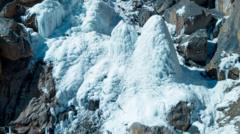
Innovative Ice Structures Transforming Himalayan Agriculture
In the remote mountain regions of India, communities are implementing a groundbreaking approach to address chronic water shortages through the construction of artificial ice pyramids. This innovative engineering solution has emerged as a critical lifeline for Himalayan villages that depend entirely on seasonal water sources to sustain their agricultural operations throughout the year.
Understanding the Artificial Ice Pyramid Technology
The artificial ice pyramids represent a sophisticated yet accessible engineering marvel designed to capture and preserve water during the harsh winter months. These cone-shaped ice structures are deliberately constructed to accumulate large quantities of snow and ice, which gradually melt during the critical spring season when farmers require maximum water availability for irrigation purposes. The technique leverages natural geological features and climate patterns specific to high-altitude regions.
How the System Functions
The creation of artificial ice pyramids involves channeling water from underground springs onto elevated slopes during winter months. As temperatures plummet in these Himalayan altitudes, the flowing water freezes naturally, forming dense ice formations that can reach substantial heights. These structures act as natural water reservoirs, storing frozen precipitation that would otherwise flow away or evaporate. When spring arrives and temperatures gradually increase, the ice melts slowly and systematically, providing a steady water supply to irrigation channels and agricultural fields downstream.
Agricultural Impact and Community Benefits
For Himalayan villages struggling with unpredictable rainfall patterns and depleting groundwater sources, artificial ice pyramids offer tangible solutions to agricultural challenges. Farmers can now depend on consistent water availability during the critical planting and growing seasons, enabling them to cultivate crops more reliably and increase yields. This stability transforms seasonal uncertainty into agricultural predictability, allowing communities to plan their farming operations with greater confidence.
Economic Advantages for Mountain Communities
The implementation of artificial ice pyramids has generated significant economic benefits for mountain communities. Farmers experience reduced crop failure rates, improved harvest quality, and increased productivity. These improvements directly translate into enhanced household incomes and greater food security for vulnerable populations. Additionally, the technique requires minimal external resource investment compared to conventional irrigation infrastructure projects.
Environmental Sustainability and Climate Adaptation
As climate patterns become increasingly unpredictable across the Indian subcontinent, communities are recognizing artificial ice pyramids as an environmentally sound adaptation strategy. Unlike energy-intensive irrigation systems, this approach harnesses natural freezing processes without requiring fossil fuel inputs. The method also reduces pressure on overexploited groundwater resources that face depletion in many Himalayan regions.
Climate Resilience in High-Altitude Regions
Mountain villages utilizing artificial ice pyramids are demonstrating remarkable climate resilience capabilities. By working with natural seasonal cycles rather than against them, communities strengthen their long-term sustainability prospects. This indigenous knowledge combined with modern engineering principles creates hybrid solutions perfectly suited to Himalayan ecosystems and local environmental conditions.
Expanding the Initiative Across Mountain Regions
The success of artificial ice pyramids in pioneering communities has attracted interest from neighboring villages and regional agricultural authorities. Several Himalayan districts are now exploring implementation possibilities, recognizing this technology's potential to address widespread water scarcity challenges. Government agencies and NGOs are collaborating to document best practices and facilitate knowledge transfer across mountain communities.
The artificial ice pyramids represent more than mere engineering solutions—they embody community ingenuity and adaptive capacity in facing unprecedented environmental challenges. As India's mountain villages continue perfecting this technique, they offer valuable lessons for water conservation and climate adaptation strategies applicable across high-altitude regions worldwide. These frozen structures stand as monuments to human resilience, ensuring that Himalayan communities can sustain their agricultural heritage and secure prosperous futures for generations to come.


