
Helium-3 Moon Mining: The Future of Clean Energy Resources
Understanding Helium-3 and Its Growing Importance
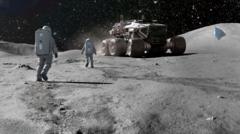
Helium-3 moon mining represents one of the most ambitious frontiers in space exploration and energy production. This rare isotope, virtually absent from Earth's natural reserves, has become increasingly valuable as global demand for clean energy solutions intensifies. Scientists and space entrepreneurs are now seriously considering lunar extraction as a viable method to secure this precious resource for future generations.
Helium-3 is a lightweight, non-radioactive isotope of helium containing two protons and one neutron. Unlike its more common counterpart, Helium-4, this isotope possesses unique nuclear properties that make it exceptionally suited for advanced fusion reactor technology. The scarcity of Helium-3 on Earth, combined with its extraordinary potential applications, has transformed it into one of the most sought-after elements in contemporary scientific research.
The Lunar Abundance of Helium-3
The moon harbors substantially greater quantities of Helium-3 than Earth. Solar wind bombardment over billions of years has embedded this isotope into the lunar regolith, creating vast natural deposits. Scientists estimate that the moon's surface contains approximately one million metric tons of Helium-3, concentrated primarily in the upper layers of soil. This extraordinary reserve dwarfs Earth's scarce supplies, making lunar exploration economically compelling for future energy security.
The distribution of Helium-3 across the lunar landscape is relatively uniform, though certain regions demonstrate higher concentrations than others. Areas with older volcanic activity and minimal disruption show elevated levels, making targeted mining operations feasible. Current geological surveys have identified promising extraction zones that could support commercial-scale operations once the necessary infrastructure is established.
Why Helium-3 Demand Is Skyrocketing
Helium-3 moon mining projects are gaining momentum because demand for this isotope continues climbing exponentially. Medical imaging applications, particularly MRI machines, consume significant quantities annually. Military and aerospace applications further drive consumption, while emerging fusion energy research programs require increasing supplies for experimental reactors. Forecasts indicate that global demand will substantially exceed current production capacity within the coming decades.
The potential for fusion energy generation represents the most transformative application. Helium-3 fusion reactions produce minimal radioactive waste compared to conventional nuclear power, making this isotope crucial for developing cleaner, safer energy systems. As nations worldwide commit to carbon-neutral futures, securing reliable Helium-3 sources becomes strategically essential for energy independence and technological advancement.
Technological Challenges in Lunar Extraction
Despite Helium-3's abundance on the moon, extracting and transporting this resource presents formidable technical obstacles. The isotope exists in extremely low concentrations within lunar soil, requiring processing of massive quantities of regolith to yield commercially viable amounts. Developing efficient extraction technology that functions in the harsh lunar environment remains an ongoing engineering challenge.
Mining operations would demand establishing permanent lunar infrastructure, including processing facilities, storage systems, and transportation mechanisms. Current space technology supports these objectives theoretically, but implementing practical, cost-effective solutions requires substantial innovation and investment. Transportation costs represent another critical factor; launching processed Helium-3 from the lunar surface to Earth demands specialized spacecraft and fuel-efficient propulsion systems.
Economic Viability and Current Projects
Several space agencies and private companies are actively investigating Helium-3 moon mining feasibility. Japan, Russia, China, and the United States have all expressed serious interest in developing extraction capabilities. Private aerospace corporations are proposing commercial ventures that could make lunar mining economically sustainable within coming decades, particularly as launch costs decrease through reusable rocket technology.
The market value of Helium-3 supports these ambitious initiatives. Current prices reflect the isotope's extreme scarcity and utility; a single kilogram commands exceptionally high valuations. Even small-scale mining operations could generate substantial returns, incentivizing investment in lunar infrastructure development and supporting technologies.
Future Prospects for Space Resources
Helium-3 moon mining represents merely the beginning of comprehensive lunar resource utilization. Water ice deposits, rare earth elements, and construction materials present additional opportunities for sustainable space economies. Establishing permanent settlements and industrial facilities on the lunar surface could catalyze an entirely new era of human space activity and scientific advancement.
The convergence of advancing technology, increasing energy demands, and declining space launch costs creates favorable conditions for lunar resource extraction becoming operational reality. Within the coming twenty to thirty years, Helium-3 obtained from the moon may contribute meaningfully to global energy systems and scientific applications, fundamentally transforming humanity's relationship with space resources.


