
Rescue Miracle: Venezuela Earthquake Survivor Found After Eight Days Trapped
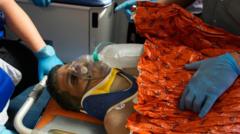
Venezuela Earthquake Survivor Rescued After Eight Days Underground
In a dramatic display of human resilience and determination, a Venezuela earthquake survivor has been pulled from the rubble alive following an eight-day ordeal trapped beneath a collapsed multi-storey car park. The remarkable rescue operation has captured international attention as emergency teams worked tirelessly to locate and extract Hernán Gil from the debris that buried him in the aftermath of the devastating earthquake.
The Collapse and Initial Entrapment
When the powerful seismic event struck the region, the multi-storey car park structure proved no match for the earthquake's force. The building's structural integrity failed catastrophically, sending tons of concrete and metal crashing down and trapping numerous individuals within its debris. Among those buried was Hernán Gil, who found himself in complete darkness, surrounded by concrete slabs and steel reinforcements in a confined pocket of the collapsed structure.
Eight Days of Hope and Uncertainty
For eight consecutive days, rescue teams worked against the clock in a race against time to locate survivors in the aftermath of the Venezuela earthquake survivor incident. Search and rescue personnel utilized specialized equipment, including thermal imaging cameras, listening devices, and trained rescue dogs to detect any signs of life within the rubble. The conditions were hazardous, with aftershocks continuing to threaten the already unstable structure and rescue workers.
During this period, Hernán Gil's family maintained a vigil outside the disaster site, hoping for news of his survival. The psychological toll on families waiting for information about trapped individuals was immense, as each passing hour reduced the statistical likelihood of finding survivors alive.
The Breakthrough Moment
On the eighth day of the rescue operation, rescue teams detected vital signs within a specific section of the debris field. Specialized listening equipment picked up sounds consistent with human activity, prompting an intensified effort in that particular area. Rescue workers carefully removed debris piece by piece, aware that any sudden movement could trigger further collapses or injure the survivor they were attempting to reach.
As the rescue workers inched closer to Hernán Gil's location, he encouraged them from within his concrete tomb, communicating his position and offering vital information about the space he occupied. His voice provided both comfort to the rescue teams and crucial guidance about the safest approach vectors for extraction.
A Survivor's Extraordinary Will to Live
What made this Venezuela earthquake survivor case particularly remarkable was Gil's ability to maintain consciousness and mental clarity after eight days without adequate access to food or water. Medical experts noted that his survival in such extreme conditions challenged conventional assumptions about human endurance. The will to live, combined with what appeared to be a fortunate pocket of relatively stable debris, allowed him to endure conditions that would have been fatal for most individuals.
Throughout his ordeal, Hernán Gil rationed whatever resources he had access to and managed to conserve energy, likely increasing his chances of survival. His mental fortitude in maintaining hope and communication with rescuers distinguished his case as one of the most dramatic rescue operations in recent disaster response history.
The Extraction Process
The final stages of extracting Hernán Gil from the collapsed structure required extreme precision and care. Rescue teams had to work with specialized cutting equipment to enlarge the opening without destabilizing the debris field. Every movement was calculated and deliberate, with structural engineers assessing the stability of the surrounding rubble before each new step.
When Gil was finally brought to the surface, medical teams were standing by to provide immediate assessment and treatment. Despite his prolonged entrapment, initial medical evaluations suggested that he had sustained no life-threatening injuries, though he required hospitalization for observation and treatment of minor injuries and severe dehydration.
International Recognition of Rescue Efforts
The successful rescue of this Venezuela earthquake survivor has brought international recognition to the Venezuelan emergency response teams involved in the operation. Rescue workers from neighboring countries also participated in the effort, demonstrating the collaborative nature of disaster response in the region. Their dedication and professional expertise proved instrumental in achieving this life-saving outcome.
Lessons from the Disaster
This incident has prompted renewed discussions about building codes and structural standards in Venezuela, particularly regarding multi-storey car parks and other public structures. Engineers and urban planners are reviewing the construction methods and materials used in the collapsed facility to prevent similar disasters in the future.
The rescue operation also highlighted the importance of maintaining well-trained, properly equipped rescue teams and the critical role that advanced detection technology plays in locating survivors in disaster situations.


