
US Treasury Chief Warns Iran of Unprecedented Financial Isolation Strategy
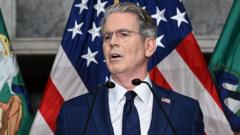
Washington Escalates Economic Pressure on Iran
The United States has announced what officials describe as an unprecedented Iran financial isolation campaign, according to statements from the Treasury Department. Scott Bessent, serving as Treasury Secretary, has declared that the American government intends to sever all remaining economic connections with the Islamic Republic while simultaneously targeting any international partners engaged in financial dealings with Tehran.
This comprehensive approach to Iran financial isolation represents a significant escalation in Washington's economic strategy toward the country. The administration has made clear that the consequences of supporting Iran economically will extend beyond bilateral relationships, affecting the broader international standing of any nation that chooses to maintain such ties.
Scope of the Economic Strategy
The Treasury Secretary's announcement encompasses multiple dimensions of economic disconnection. Rather than limiting measures to specific sectors, the stated objective is to eliminate virtually all forms of economic engagement between the United States and Iran. This includes financial transactions, trade relationships, and investment activities that currently exist or might develop in the future.
According to Bessent's remarks, the Iran financial isolation policy will not operate in isolation. Instead, Washington plans to leverage its considerable economic influence to discourage third-party nations from engaging with Iranian financial institutions or conducting commerce with Iranian entities. Countries that refuse to comply with these expectations would face potential economic consequences from the United States.
International Implications and Enforcement
The enforcement mechanism behind this Iran financial isolation strategy relies on the United States' position as the world's largest economy and its control over global financial systems. American financial institutions and the dollar-denominated payment networks that dominate international commerce give Washington significant leverage to discourage cooperation with Iran.
Any nation attempting to maintain substantial financial partnerships with Iran would risk sanctions, reduced access to American markets, and exclusion from dollar-based transactions. This creates powerful incentives for countries to align their economic policies with American objectives regarding Iran.
Current Context of US-Iran Relations
This announcement arrives amid heightened tensions between the United States and Iran. The treasury initiative represents the culmination of years of escalating economic pressure, supplemented by diplomatic isolation and military posturing. Treasury officials have characterized the Iran financial isolation approach as the most comprehensive campaign undertaken against any nation in modern history.
The stated goal extends beyond immediate policy objectives to fundamentally reshape Iran's economic capabilities and international financial access. By cutting off the country from global financial systems and punishing international partners, American policymakers aim to create conditions that force significant changes in Iranian government behavior and policy directions.
Strategic Considerations for Global Partners
The Treasury Secretary's statements present a significant challenge to nations with existing economic interests in Iran. Countries that have sought to maintain commercial relationships despite American sanctions now face explicit warnings about the consequences of continuing such engagement. This puts considerable pressure on international actors to choose between Iranian markets and American economic access.
European nations, in particular, face difficult decisions regarding their approach to Iran financial isolation measures. Many European countries have attempted to maintain some economic ties with Tehran despite American sanctions, but the new Treasury statements make clear that such balancing acts may no longer be viable under the current administration's approach.
Economic Impact Projections
The comprehensive nature of the proposed Iran financial isolation campaign would have severe consequences for the Iranian economy. Complete severance of economic ties with the world's largest economy, combined with the isolation of secondary trading partners, would likely devastate sectors dependent on international commerce and foreign investment.
Iranian industries reliant on imported components, foreign technology, or international financing would face particular challenges. The oil sector, which represents Iran's primary source of foreign currency, would likely face additional restrictions beyond existing sanctions frameworks.
Administration's Stated Rationale
Treasury officials have justified the Iran financial isolation strategy as a response to what they characterize as the country's destabilizing activities in the Middle East, support for designated terrorist organizations, and development of ballistic missile capabilities. The administration contends that only through comprehensive economic isolation can it achieve meaningful changes in Iranian policies.
The Treasury Department has indicated that negotiations or alternative approaches are not currently under consideration. Instead, maximum economic pressure through Iran financial isolation represents the preferred strategy for achieving American policy objectives.


